
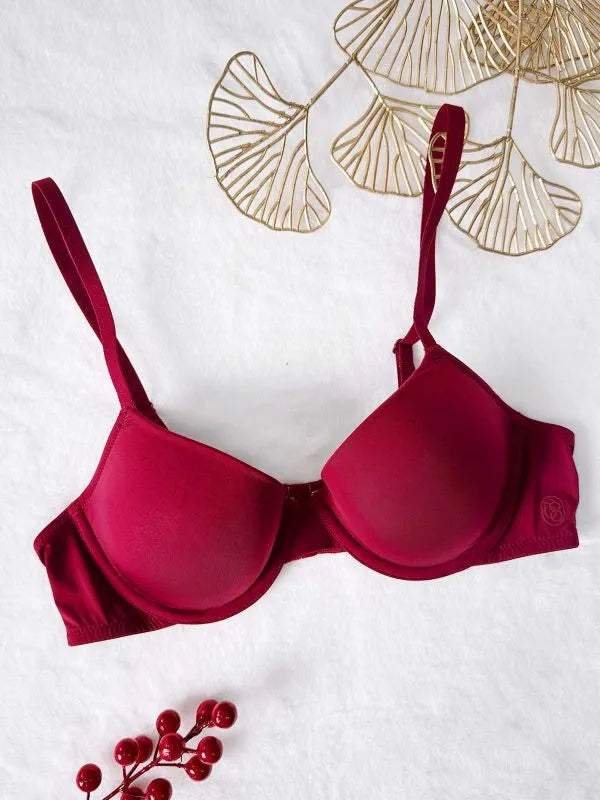
If you’ve ever stood in a fitting room wondering whether to grab a 34D or a 36C off the rack, you’re not alone. This is one of the most common questions in bra shopping, and the answer surprises many people.
Is 34D the Same as 36C?
Here’s the short version: 34D and 36C have the same cup volume but different band sizes. They are what the lingerie industry calls sister sizes, which means they’re related but not identical fits.
The key difference comes down to the band. A 34D has a tighter, shorter band that wraps around a 34-inch ribcage, while a 36C has a looser, longer band designed for a 36-inch ribcage. Even though the cups hold a similar amount of breast tissue, the way each bra sits on your body will feel noticeably different.
Many people can comfortably wear both sizes depending on the brand and style, but one will usually feel more secure than the other. For example, someone with a snug underbust measurement around 33-34 inches will likely prefer the firmer band of a 34D. If your underbust falls closer to 35-36 inches, the 36C will probably feel more comfortable without sacrificing support.
The bottom line? Same cup, different fit. Understanding this distinction makes all the difference when you’re trying to find bras that actually work for your body.
Understanding Bra Size Basics (Band vs Cup)
Before diving deeper into the 34D versus 36C debate, it helps to understand how bra sizing actually works. Every bra size has two parts: the number (your band size) and the letter (your cup size). These two measurements work together, not independently.
The band size represents the circumference of your ribcage, measured in inches directly under your bust. This number is crucial because the band provides 80-90% of your support. A well-fitting band should feel snug on the loosest hook when new, giving you room to tighten it as the fabric stretches over time.
The cup size is where things get less intuitive. The letter doesn’t represent a fixed volume of breast tissue. Instead, it represents the difference between your bust measurement at the fullest point and your underbust measurement. A D cup means there’s roughly a 4-inch difference, while a C cup means about a 3-inch difference. You can learn more about the difference between C cup and D cup to better understand how these measurements impact fit.
Here’s the important part: a D cup on a 34 band is not the same physical volume as a D cup on a 38 band. Cup letters scale with band size. Think of it this way a 34C and a 36C don’t have equivalent cup volumes, even though they share the same letter. The 36C actually holds more breast tissue because the cup dimensions increase proportionally with the larger band.
This is why knowing your exact measurements matters less than understanding how band and cup work together.
34D vs 36C: What Is Actually Different?
Now that you understand the basics, let’s break down exactly what separates these two sizes. 34D and 36C are sister sizes, meaning they share approximately the same cup volume but differ in band length and overall feel.
A 34D has a 34-inch band, which wraps more firmly around the ribcage, paired with a D cup relative to that band. The D cup accounts for a 4-inch difference between bust and underbust, resulting in a bust measurement of about 38 inches.
A 36C has a 36-inch band, which sits looser around the torso, paired with a C cup relative to that larger band. The C cup represents a 3-inch difference, also resulting in a bust measurement of approximately 39 inches. The cup volume ends up nearly identical because as the band size increases, the cup letter decreases to compensate.
When it comes to support, the 34D delivers a more secure, lifted feel because the tighter band does more of the heavy lifting. This works well for smaller ribcages or anyone who prefers maximum support during high-impact activities. The 36C, on the other hand, offers more room around the ribcage and distributes pressure more evenly, which many people find more comfortable for all-day wear.
Who might prefer which? If your underbust measures closer to 33-34 inches and you want that snug, anchored sensation, the 34D is likely your better option. If you measure closer to 35-36 inches, or you simply prefer a softer feel around your midsection, the 36C will probably suit you better.

What Are Sister Sizes and How Do They Work?
Sister sizes are bra sizes that share similar cup volume but have different band lengths. This concept exists because cup size is relative to band size, not a standalone measurement.
The general rule is simple: going down one band size means going up one cup letter to maintain the same cup volume. Going up one band size means going down one cup letter. This is why 36C and 34D can contain similar amounts of breast tissue despite having different labels.
Here are some sister size chains that include 34D and 36C:
-
32DD ↔ 34D ↔ 36C ↔ 38B
-
32D ↔ 34C ↔ 36B ↔ 38A
-
30DD ↔ 32D ↔ 34C ↔ 36B
Using sister size charts can be incredibly helpful when your usual size feels off in a particular brand or style. If a 34D band feels too tight in one bra, you might try the 36C in that same style before giving up on it entirely.
One important note: “same cup volume” means the bra is designed for a similar amount of breast tissue, but the way it sits on your body can still feel different. The projection of the cup, the width of the underwire, and how the band anchors everything will vary. Sister sizing is a troubleshooting tool, not a guarantee of identical fit.
How to Tell If You Should Wear 34D or 36C
The decision between 34D and 36C usually comes down to how the band feels on your ribcage and how well the cups contain your breast tissue. Most people have a clear preference once they try both.
Signs you should choose 34D:
-
The band on your current 36C rides up in the back throughout the day
-
You fasten a 36C on the tightest hook and it still feels loose or unstable
-
You prefer a firmer band for everyday wear or need extra support during workouts
-
Your snug underbust measurement falls around 33-34 inches
Signs you should choose 36C:
-
The band on your current 34D digs in or leaves red marks even after wearing it all day, which could indicate you need a well-fitting bra
-
You can barely fasten a 34D or it restricts your breathing when you sit or bend forward
-
You’re between sizes and prefer a softer, more relaxed band feel
-
You notice the underwire pressing uncomfortably into your sternum or ribs
-
Your snug underbust measurement falls around 35-36 inches
For a quick at-home check, wrap a measuring tape snugly around your ribcage directly under your bust. If you measure around 33-34 inches, you’ll generally align better with a 34 band. If you measure around 35-36 inches, a 36 band will likely feel more comfortable. Keep in mind that different bras run differently in terms of band stretch, so this is a starting point rather than an absolute answer.
Fit, Comfort, and Common Mistakes With 34D and 36C
Studies suggest that up to 80% of people wear the wrong size bra, with most wearing bands that are too big and cups that are too small. This widespread issue can make the choice between 34D and 36C feel more confusing than it needs to be, especially since cup size is relative to band size.
Signs your band is too big (common in 36C wearers who might need 34D):
-
Your bra rides up between your shoulder blades, even after you’ve adjusted the straps
-
The straps dig into your shoulders because the band isn’t doing its share of the work
-
You constantly adjust or pull the bra down during the day
-
The back of the bra sits higher than the front
Signs your band is too small (common in 34D wearers who might need 36C):
-
Deep marks or persistent discomfort around your ribcage
-
The band feels painful when sitting, twisting, or after several hours of wear
-
The underwire presses hard into your sternum or the sides of your ribs
-
You struggle to take a full, comfortable breath
Here’s something many people don’t realize: cups that are too small can trick you into thinking the band is the problem. When breast tissue spills out of the cups, it can make the entire bra feel tight and restrictive. Before deciding your band is too small, make sure you’ve scooped all your breast tissue into the cups properly. If the cups still overflow after scooping, you may need a larger cup rather than a larger band.
To test properly, always try new bras on the loosest hook. This gives the band room to tighten as it stretches over months of wear. Move around in the fitting room, lift your arms, bend over, sit down, to see which size stays in place without discomfort.

Practical Tips for Trying 34D and 36C in Real Life
Bra sizing varies significantly by brand, style, and fabric stretch. What fits perfectly in one brand’s 34D might feel completely different in another’s. The most reliable approach is to try both 34D and 36C in the same bra model whenever possible.
When comparing sizes, check these specific things:
-
Try the same bra style (like a T-shirt bra or balconette) in both 34D and 36C to make a direct comparison
-
Check the underwire placement, it should fully encase your breast root without sitting on tissue or poking into your ribs
-
Check the gore (the center front panel between the cups), in wired bras, it should lie flat or nearly flat against your sternum
-
Fill both cups completely by scooping and adjusting before making any judgments
Focus on how the bra feels over time: For an equally important loungewear experience that emphasizes confidence, comfort, and sensuality, explore the ultimate ladies' robes.
-
The band should feel supportive but not restrictive after 10-15 minutes of wear, not just when you first fasten it
-
Look for gaping at the top of the cup or spillage at the sides and neckline in each size
-
Notice whether the band stays parallel to the floor or creeps upward
Your breast shape also plays a role that measurements alone can’t capture. Someone who is full on top might fill a 34D differently than someone who is full on bottom, even with identical bust measurements. Wide set or close set breasts may prefer one sister size over another in certain styles.
Think of 34D and 36C as options within your personal fit range rather than a rigid, fixed “one true size.” Knowing both sizes gives you flexibility when bra shopping across different brands and styles. Some people keep both sizes in their drawer because certain bras simply run larger or smaller than others.
Finding your perfect fit between 34D and 36C isn’t about picking one size forever, it’s about understanding what each size offers and knowing when to reach for which. Armed with this information, you can walk into any lingerie department with confidence, knowing exactly what to look for and what questions to ask. The next time you’re torn between these two sizes, grab both, try them on, and let your body tell you the answer.