The smooth pavement transitioned to gravel, and I gripped the steering wheel tightly as the gravel turned into a bumpy dirt road. The landscape was desolate, with only the occasional abandoned building breaking the horizon.
My first thought was, "Am I heading into a horror film?"
That morning, I was at my friend Sean's place in Santa Fe, New Mexico, mapping out my journey to Page, Arizona. Just a day into my three-week road trip, Sean recommended a stop at Chaco Canyon, famous for its stunning 9th-century pueblo ruins. Since ruins are my favorite subject to photograph (especially when alpacas are around!), I couldn't resist. It was a mere 21-mile detour from my route.

Left: The northern entrance to the park is a rough dirt road off Highway 7950. Right: Abandoned houses dot the landscape.
As I bounced along the unpaved road, I regretted my choice, feeling like I was in the backseat of a jeep on a bumpy rural trek. Every couple of minutes, I thought about turning back. My car was jolting so violently at 10 mph that I feared it might fall apart.
A black dot appeared in the distance, mirage-like, and grew clearer as I approached. It was a black Ford Mustang struggling down the same road. If that Mustang could make it, surely my trusty Kia Spectra, affectionately named Betty, could too! Soon, a small RV maneuvered around the ruts ahead, reassuring me I was on the right path.
Finally, the park entrance emerged, revealing a beautifully paved road. I couldn't help but exclaim, "Hallelujah!" The park features a nine-mile paved loop connecting the main ruins and several hiking trails.
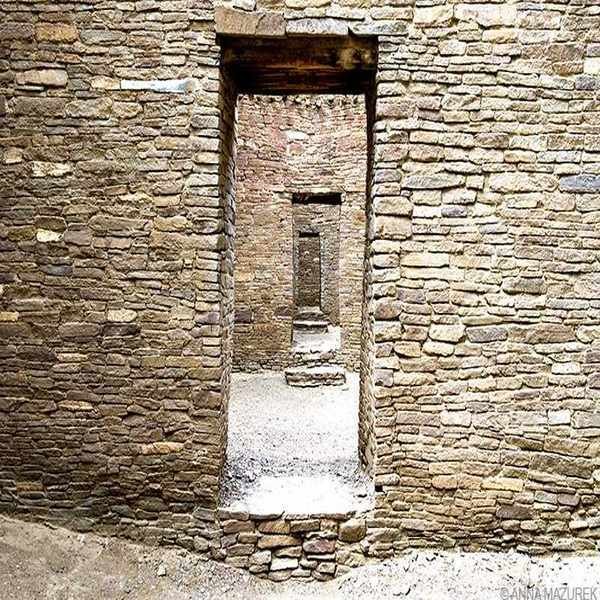
Doorways within Pueblo Bonito, constructed for astrological alignments with solstices.
My first destination was the breathtaking Pueblo Bonito, the park's most significant ruins. Once boasting four stories and over 660 rooms, the view was surreal, reminiscent of Machu Picchu's intricate Inca architecture. Both Chacoans and Incas were unparalleled builders.
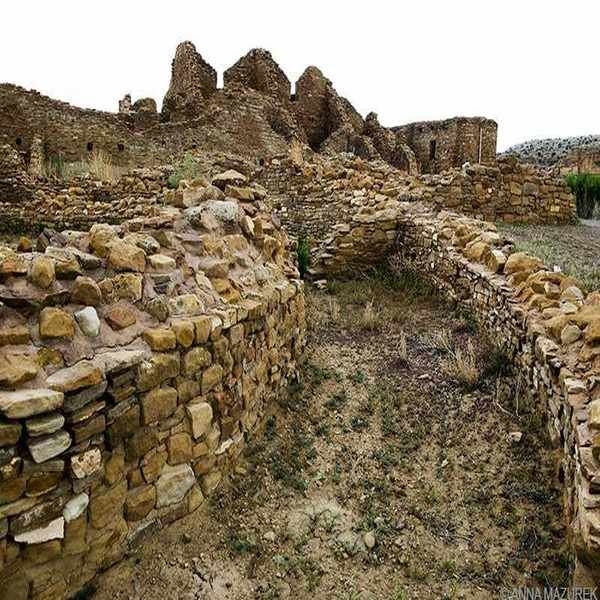
Pueblo del Arroyo, built in two stages between AD 1025 and AD 1125.
As I headed toward the next ruins, Pueblo del Arroyo, a storm rolled in. Thunder and lightning crackled nearby, but it seemed to be moving away from me. I quickly donned my raincoat and covered my camera with a rain cover.
My last stop was Casa Rinconada, the park's largest excavated kiva—partially underground spaces used by Puebloans for ceremonies. While impressive, it couldn't compare to the beauty of Pueblo Bonito.
Fortunately, the storm seemed to drift north, giving me a bit of relief for my photos. I had a strict deadline to leave the park by 3:30 p.m. to reach my campground reservation in Page, Arizona, before it closed at 9 p.m. Although it's a five-hour drive, the time zone change gifted me an extra hour.

Be mindful of the weather when visiting Chaco Canyon; both entrance roads can become quite rough.
Suddenly, I realized the storm was barreling toward the dreadful dirt road, the only northern exit from the park. With only two exits available, I remembered the dry riverbed I had crossed earlier, marked with ominous signs warning against crossing if water was present. Panic set in, and I rushed toward the exit.
Once the pavement ended, I was jostling along the dirt road again, now following another car. More vehicles appeared in my rearview mirror as we all hurried to beat the storm. I smiled, feeling camaraderie in our shared adventure.
The storm loomed ominously in the distance, trailing me like a vulture as I drove back to the nice, paved highway. When I reached the riverbed, it was dry! Even the paved roads remained a bit rough, but I made it to Page, Arizona, with 20 minutes to spare.
After sharing a photo from Chaco Canyon on Instagram, I chuckled at a friend's comment: "We wanted to go there but ran out of time and were worried about the dirt roads!" Sometimes, the most incredible destinations are the hardest to reach.
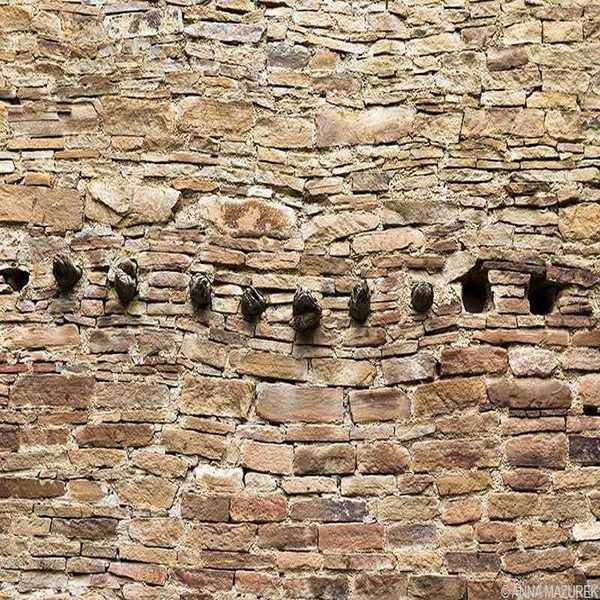
The wooden beams used in the structures originated from the Zuni Mountains (50 miles south) and Chuska Mountains (50 miles west).
Visiting Chaco Canyon: Essential Tips
Fees/Camping: $16 per vehicle for a 7-day pass; camping costs $15 per site and requires advance reservations.
Getting There: Chaco Culture National Historical Park can be accessed via two roads. (View map here.) From the north via I-25: Drive along highway 550 past Cuba and turn left just past a convenience store (mile 112.5) onto CR7900. A small sign indicates the turn. This road ends at a stop sign; turn right onto CR7950, which quickly becomes a gravel road leading to the park with its glorious paved roads! It's 20.5 miles from the turnoff to the park, but expect the journey to take about an hour depending on road conditions. From the south: If coming from I-40, take highway 371 from Thoreau to highway 9, then turn onto CR57. (Highway 371 also leads to Bisti Wilderness.) Alternatively, exit I-40 at Milan, then take highway 605 to 509 to 9.
The northern route is shorter and more traveled. Be aware that both roads can become challenging after rain. Always check the weather and contact the visitor center at (505) 786-7014 for route advice before your trip. Cell signal is limited—don't depend on GPS!
Best Time to Visit: Avoid winter due to snow and ice. Rainy season (July – September) can make roads difficult. Spring and fall (September – October) offer the best weather.
Why Are the Roads So Poor?
The visitor center explains that the roads traverse both county and tribal lands, with each responsible for maintenance. Industrial traffic from nearby oil fields also contributes to the conditions. Some speculate that rough roads deter large tour buses and help preserve the park, which has limited facilities. If you're exploring the Southwestern U.S., research road conditions ahead of time! Some roads, including CR7500 near Bisti Wilderness, are improving thanks to nearby oil operations.