

Ground cover plants often go unappreciated, yet they play a crucial role in any landscape. Their myriad benefits make them an excellent choice for various gardening needs.
While many gardens focus on vibrant, towering plants, the finest ground cover varieties work diligently behind the scenes, enhancing the overall charm of your yard.
These plants effectively fill gaps, thrive in challenging conditions, stabilize soil, and unify different sections of your outdoor space.
7 Key Advantages of Ground Cover Plants
Ground cover plants typically spread low to the ground, rarely exceeding three feet in height. They're hardy, weather-resistant, and easy to maintain. So, why wouldn't you want to include them in your garden?
Let's explore the primary benefits of ground cover plants and how to incorporate them into your landscape.
1. Year-Round Appeal
Many ground cover species are evergreen, ensuring your garden remains visually interesting throughout the year. Opt for varieties with glossy or variegated foliage to create a stunning visual effect, especially in shady spots where light is limited.
Many options also excel in drought-prone areas, making them ideal for sunny locations and dry soil conditions. Establish them effectively by properly watering and applying mulch to retain moisture.

Cyclamen hederifolium features lovely flowers and distinctive leaves, thriving in shaded areas.
2. Low Maintenance
Ground cover plants are perfect for low-maintenance borders. Once established, they require minimal care while providing a great foundation for taller plants.
For example, I enjoy having evergreen Vinca minor cascading down a sloped area of the garden. It's fast-growing and only needs a light trim in the fall to stay in check, blooming from April through summer.
Our clusters of hardy geraniums also provide a beautiful display of pink and purple flowers atop attractive foliage, needing just a trim after flowering and some spring feeding.
Whether you choose fast-growing or slower-growing options, initial care is essential for strong establishment. Regularly remove weeds, keep pests at bay, and ensure the soil remains moist. Once established, many ground cover plants can be left to thrive independently.

Hardy geraniums are fantastic low-maintenance ground cover plants.
3. Weeding Made Easy
As ground cover plants spread, they effectively prevent weeds from taking hold. Their ability to blanket the ground obstructs sunlight from reaching the soil, keeping weeds at bay.
Initially, you may need to weed around newly planted ground cover until it establishes itself, but once it takes off, you'll have one less gardening chore!
For weeding among tightly packed plants, I recommend using a tool like the Fiskars Ergo Scratch Tool Garden Weeder.

Ladies mantle (Alchemilla mollis) effectively blocks weeds with its broad leaves.
4. Enhance Soil Quality
Covering large areas, ground cover plants mitigate the drying effects of wind and sun, keeping the soil cool and damp.
Their roots help bind the soil together, especially useful in sloped yards or areas prone to erosion from rain.
Many hardy herbs and rockery plants, like alpine strawberries, flourish in poor soils. They're often fast-growing, clump-forming, evergreen, and boast lovely flowers.

Alpine strawberries thrive well in light shade and are great for planting beneath hedges and trees.
5. Softening Hardscapes
Backyards often feature paths, walls, and stylish patios made from hard materials like brick, wood, and stone.
Ground cover plants serve as natural softeners to blend these hard features with your garden. Newly laid paths can disrupt the flow of your yard, but lining their edges with fast-growing ground cover can soften the transition.
Trailing plants also look lovely spilling over the edges of brick planters and walls, creating a gentler, more inviting appearance.

Ground cover plants can soften the edges of paths and hard features.
6. Adapt to Climate Changes
Climate change is impacting gardening practices with more frequent extreme weather events.
Maintaining a lawn during droughts, floods, or freezes can be challenging and time-consuming. Instead of opting for paving or artificial grass, consider a tapestry lawn made of resilient ground cover plants like thyme, chamomile, and low-growing grasses.
When you select plants with similar needs, they flourish together, creating a fragrant, flower-filled, pollinator-friendly area that requires minimal mowing, watering, or fertilizing.

Herbs and sedums can form a beautiful, climate-resilient tapestry lawn.
7. Highlight Feature Plants
Striking plants like canna lilies, dahlias, and climbing roses shine in the garden, but they benefit from low-growing companions.
In your garden design, utilize strategic underplanting to fill in low spots in planters and borders, creating a stunning contrast with taller plants.
Combining contrasting colors, unique foliage, and various flower shapes can enhance your outdoor space.
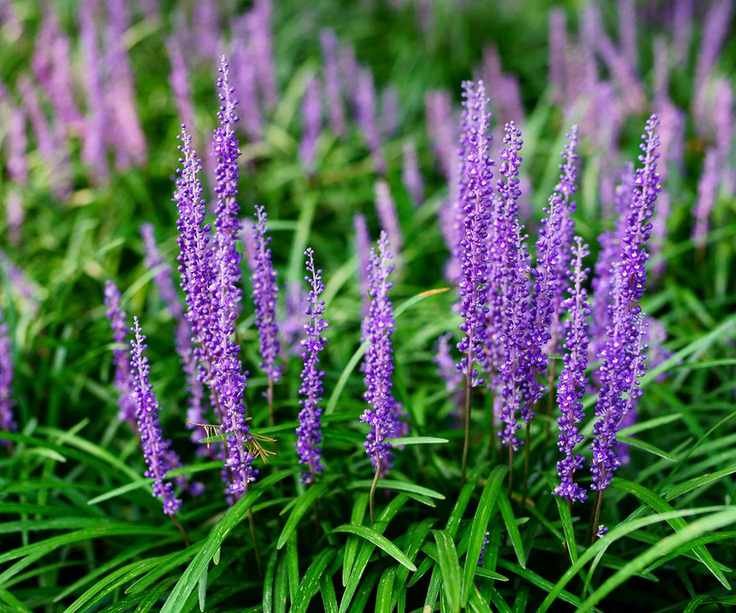
Liriope muscari adds visual interest beneath taller plants.
When to Avoid Ground Cover Plants
If your garden is small, steer clear of fast-growing and invasive species.
Lily of the valley is a popular spring perennial known for its scent, but it can spread quickly if left unchecked.
Some hardy geraniums may self-seed rapidly, so research your options carefully before planting.

Lily of the valley is a beloved spring plant but can be invasive.
For a natural garden that attracts wildlife, incorporate ground cover plants into your patio design, allowing hardy geraniums, herbs, and sedums to spill from paving cracks and cascade over walls for an eye-catching effect.


